Jennie’s Review
What a great start to my reading for 2026. This author always makes me put on my thinking cap, leading to illuminating reads. This time, he outdid himself.
Having read several of this author’s forensics books, I was surprised by the slight curveball he throws here—shifting the focus from proving guilt to examining the systems that assume guilt and force people to fight to prove their innocence. And honestly? This book made me angry. Not at the writing (which is excellent), but at the systems that are supposedly designed to support the judicial process and instead repeatedly fail the very people trapped inside them.
Milman breaks down, among many, individual forensic tools—eyewitness testimony, fingerprints, hair analysis, and bite marks (the bite mark section, in particular, was jaw-dropping)—and clearly explains how each is meant to work. Then he delivers the gut punch: walking us through real cases where these “scientific” methods were flawed, misused, or outright wrong, and showing the devastating impact on the lives of those who paid the price.
As always, the depth of research alone makes this book worth reading, but it’s the way Milman assembles and presents that information that really stands out. It’s accessible, meticulously compiled, and deeply unsettling in the best way. This is one of those books that leaves you shaken, better informed, and maybe a little fired up—and that feels exactly like the point.
Book Summary
The American criminal justice system prides itself on convicting only those who have been proven guilty beyond a reasonable doubt, but much of admissible forensic evidence on which juries base their determination of guilt or innocence has not been rigorously tested or peer reviewed. Sometimes, it is contaminated, inaccurate, or unreliable, and occasionally, forensic experts are mistaken in their analysis, exaggerate their conclusions, or provide misleading testimony.
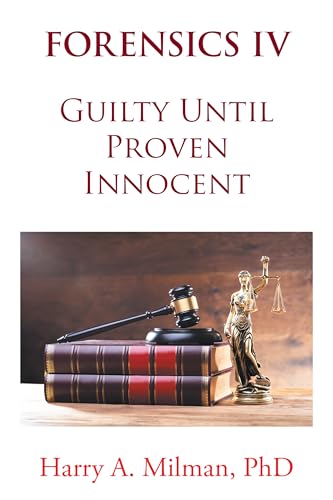
In Forensics Guilty Until Proven Innocent, I discuss how flaws in forensic evidence, including fingerprint, firearm, DNA, hair, bite-mark, and bloodstain pattern analyses, as well as limitations in eyewitness identification, overstated conclusions by forensic experts, scientific fraud at the FBI and state forensic crime laboratories, and police and prosecutorial misconduct result in innocent people being found guilty of crimes they did not commit. Once wrongfully incarcerated, it is almost certain the process of postconviction relief toward exoneration will be long and arduous, unlike defendants who are guaranteed a speedy trial. Some of the wrongfully convicted people I reviewed include Amanda Knox, wrongfully incarcerated in Italy for murdering her housemate based on false DNA analysis; Ronald Cotton, misidentified and convicted of rape, only to be exonerated after nearly eleven years and team up with the victim to lecture about faulty eyewitness identification; Brandon Mayfield, an Oregon attorney wrongly accused of being an Islamic terrorist involved in the 2004 train bombing in Madrid, Spain, based on faulty fingerprint identification; Kirk Odom, wrongfully imprisoned for more than twenty-one years as a result of false microscopic hair analysis; Keith Harward, wrongfully convicted of rape and murder based on overstated bite-mark comparison analysis; Julie Rea and David Camm, found guilty of killing her son and his wife and two children, respectively, based on inaccurate bloodstain pattern analysis; Patrick Pursley, wrongfully convicted of murder due to firearm misidentification; Kirk Bloodsworth, the first death row inmate to be exonerated with DNA evidence; and five men wrongfully incarcerated because of false microscopic hair analysis; among others.
 Jennie Reads